
Thanks to Craig Cooper and Jennifer Verona for suggesting this song in last week’s Great Ape selection post for paid subscribers. Now that we’re off tour, we’ll get back to doing a song every two weeks or so, and you can take that… TO THE BANK. (* Hard to Kill quote🥋)
CHRIS: Keith, before he turned ten, young Steve Winwood was already gigging with his father’s group The Ron Atkinson Band. They would set him up behind an amp, or with his piano’s back to the audience, because he was clearly too young to be in the pubs that were the backbone of RAB’s circuit. By 15, Little Stevie, as he was known in the mid-60s, had joined The Spencer Davis Group along with his older brother Muff — yes — and within a year or so played Hammond organ on the band’s two UK No. 1 singles, “Keep On Runnin’” and “Somebody Help Me.” Moments later, after a healthy lunch, he co-wrote “Gimme Some Lovin’,” which cracked the Top 10 in the US.
Winwood — I think at this point no longer going by “Little” — left Muff and Spencer Davis (& another guy) behind the following year, in 1966, and started Traffic with three other Birmingham musicians who are moderately famous, but not famous enough to be named in this discussion, which will contain quite a few A-listers before it’s done. Traffic was supposedly a step up from the Spencer Davis Group — they certainly played more ambitious stuff, and the mean musicianship was higher, but to me it’s not very listenable 🤷. Many people (relatively speaking) like the song “The Low Spark of High-Heeled Boys,” which I believe is at its best when you’re listening to its title. When people who don’t own a computer or other connected device ask me what Traffic sounded like — this happens usually every week — I will recite a fact about the band’s first trip to America: They flew into San Francisco and were picked up at SFO by The Grateful Dead, whom they didn’t know and weren’t expecting to see at the airport, and then the Dead took them in the Dead van back to the Dead house in Haight-Ashbury, where everybody took Dead LSD and hung out for a few days. So imagine the type of British band that The Grateful Dead wanted to pick up at the airport, unbidden.
Thankfully, Traffic finished doing their thing after just two albums, and in 1969 Winwood started Blind Faith with Eric Clapton and Ginger Baker, who used to hide behind his piano with him when he played in his dad’s band, way back when. Just kidding, who knows how they knew each other. I mean, many people do — I don’t. But they formed Blind Faith, and, it must be acknowledged, many people liked that act. It’s not for me, but I guess I prefer it to Traffic. They made one album, and it went to No. 1 in both of the countries these stories usually focus on, then they broke up because Clapton got distracted and wandered off.
Well, I have some tough news that you’re not going to like. Winwood decided to go into the studio to record an album, and he made the mistake of asking his old Traffic bandmates to come help him. 😡 What should have been his solo debut turned into six more(!) Traffic records. The less said here, the better — even Winwood, when Traffic threw in the towel four years later, needed to take three years away from playing in a band to repair his soul. He spent the time doing session work for other musicians, occasionally appearing live with one or another of these studio projects, and just chilling the hell out at his pad in Gloucestershire.
Finally, in 1977, he made his charming but very English solo debut, which he named Steve Winwood after dipping a quill into the same creative well that he used to write the music. And then FINALLY, in 1980, on an album that boasted a title he hadn’t copied off his driver’s license — Arc of the Diver — he discovered synthesizers(!). Still no songs, unfortunately, until FIIIIIINALLY, in 1982 he dropped Talking Back to the Night (say what?), which gave the world “Valerie,” a very good song indeed! But the rest of the album wasn’t amazing — believe me — and so Winwood sat down and took four long years to cook up the masterpiece that would confer not just earthly fame, but pan-cosmic renown. In 1986, with no fucking warning (I consider thirteen so-so albums to be “no warning”), the world was given…
Back in the High Life (fiiiiiiiiiiiiiiiiiiiiiiiiiiiinally).
And what a record it is. “Higher Love,” the first single, topped charts on 251 planets, making Steve Winwood — at last he could use his full name — an epic figure in scores of cultures that don’t even know each other exist, and that share nothing more than this sacred text.
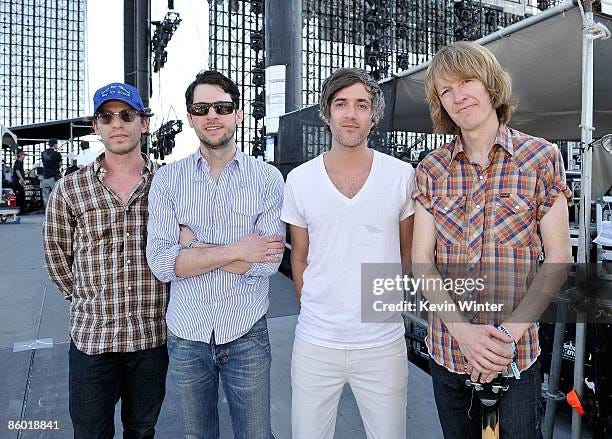
Keith, what was it like to sing “Higher Love” into a microphone, to strum its inspired chords, to channel the god-man Big Steven Winwood? (Also, don’t you think Steve Winwood looks a lot like our old keyboarding guitarist Max Hart??)
KEITH: Is it wild that my greatest reaction to your incredibly thorough potted history — a history so thorough that I dare say I consider it to be un-potted (so, I guess, planted in a yard or garden?) — is it wild that my reaction was, “Wait a minute, Steve Winwood is British?!” I would say that I’d always assumed that he was American, but that would suggest that I’ve ever thought for more than two seconds about Steve Winwood, In fact, if I hadn’t just read your mid-to-long-length biography, I probably would have spelled his last name Wynwood, like the funky, edgy ”Williamsburg of Miami” arts district that Steve probably thought was named for him, like some kind of artistic patron saint, until he saw it written on a map and fell into despair.
Anyway, the guy doesn’t sing with much of a British accent, does he? I mean, I guess there are a lot of stealth Brit singers — your Elvis Costellos, your Phil Collinses. Not everyone is coming at you with their regionally-specific British pronunciations, the way early Alex Turner or any-era Liam Gallagher or even Billy Joe Armstrong does, who I’m guessing must have spent summers in Camden as a child, or something. But, yeah, I think that lack of vocal specificity kind of points to a larger problem of anonymity that I feel with Wynwood (see? I just spelled it that way and refuse to edit my pure instinct). Dude wrote a small clutch of bangers (even if it did take him long enough!), but I’m not sure I could have named them off the top of my head. I think I would have guessed that he had performed “Every Time You Go Away,” but that’s Paul Young, who is, it turns out, yet another stealth Brit.
In any case, I’m just relieved that I didn’t need to go ahead and spend a lot of sweat adjusting the phonetics of the song to suit my very Miamian accent.

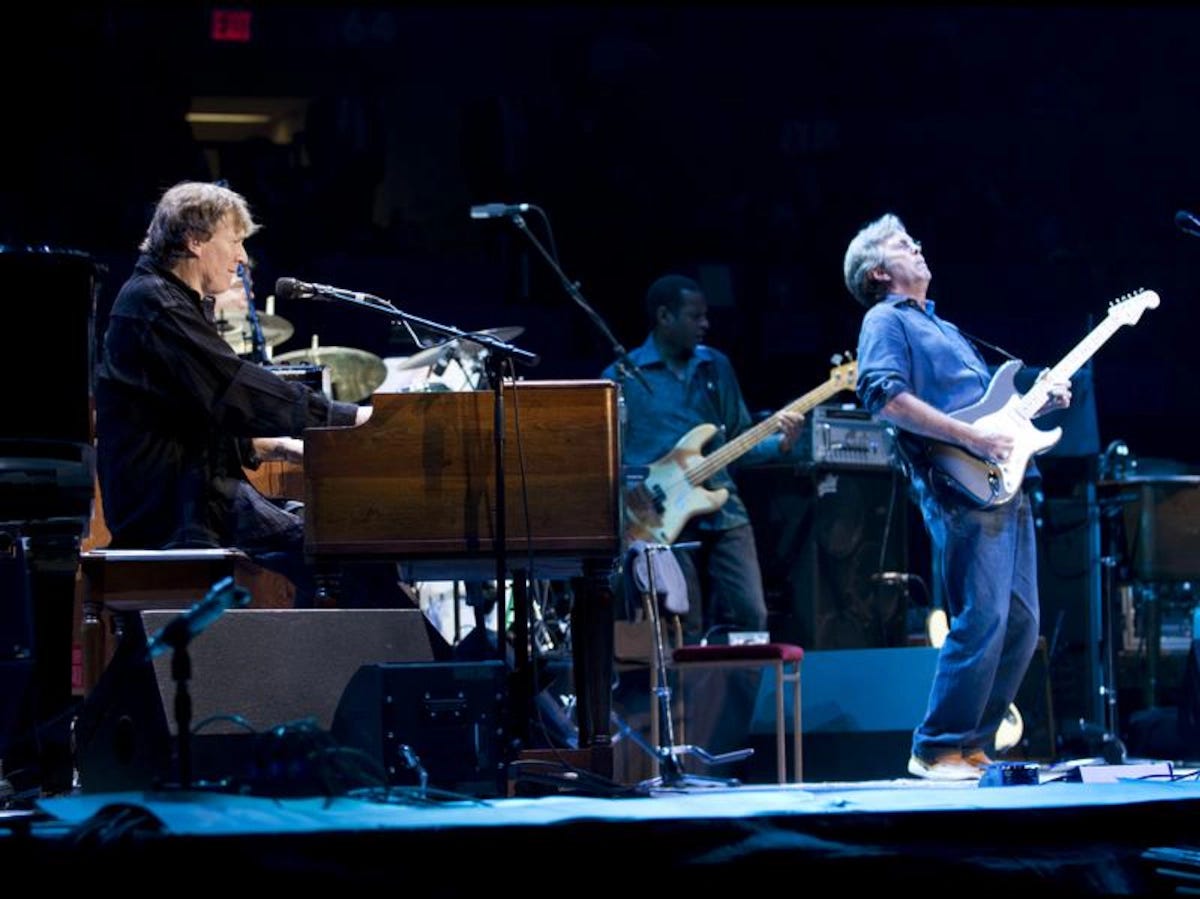
CHRIS: Though our British readers are no doubt gnashing their teeth and tugging at their hair and rending their tunics, I can give your ignorance a pass. As I mention above, none of Steve Winwood’s pre-solo projects were worth a good goddamn, and I’d bet that the thing he’s most famous for later in his career is being part of the 2004 Hall of Fame Induction band that competently performed “While My Guitar Gently Weeps” as Prince’s guitar ravenously shredded. Interviews with Winwood present a man much more at home in the studio than on the stage, and not at all interested in cultivating a cool public persona, so he never really cut the vivid figure that did, say, a Don Henley or an Elvis Costello, both of whom, it seems clear, really liked how their faces looked zoomed up all big on a TV set.
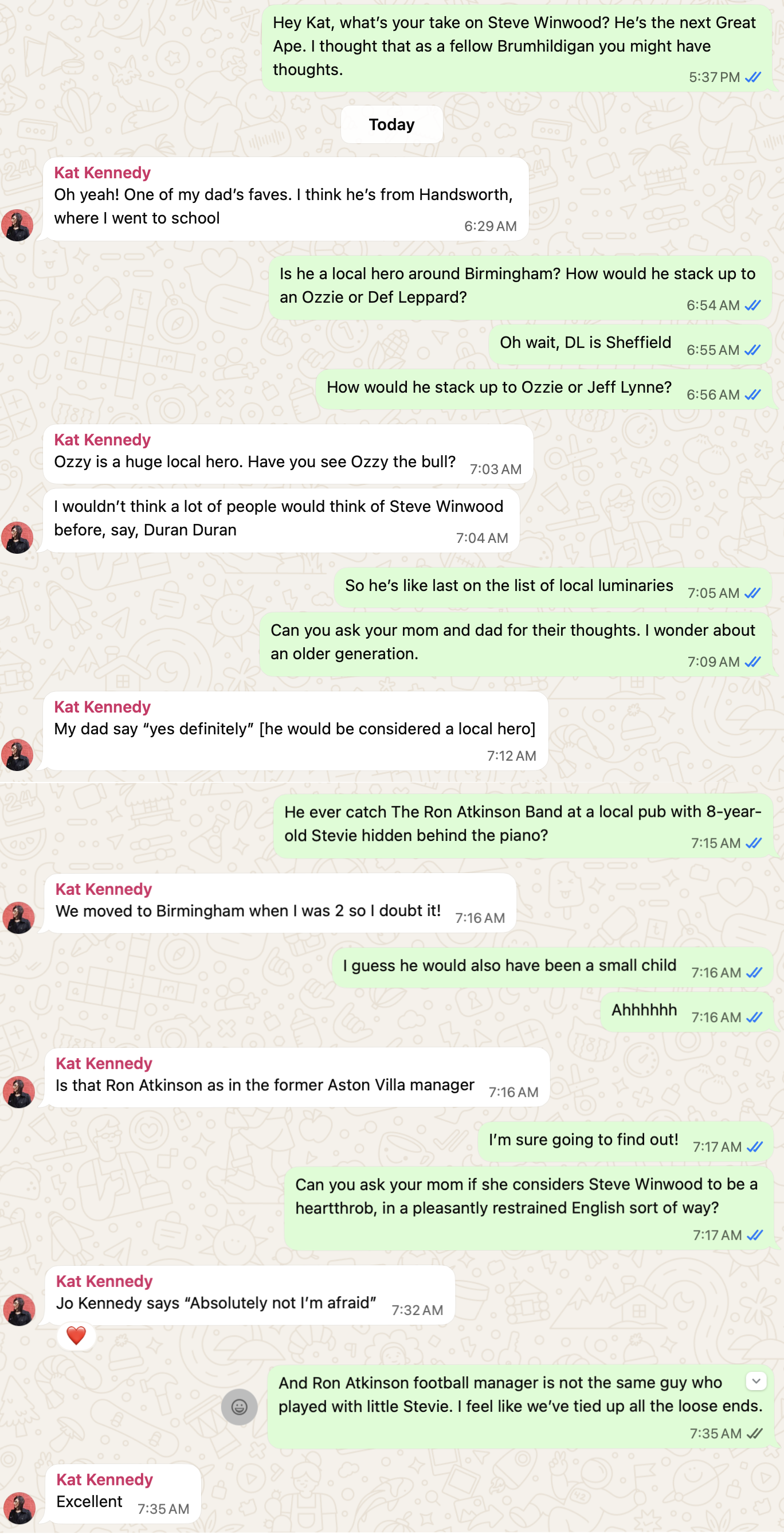
And yeah, he doesn’t exactly lean into his Brummie accent. I mean… he was obviously — and I believe admittedly — under the heavy influence of American soul singers. He grew up listening to Ray Charles, Muddy Waters, Sam Cooke, and consciously emulating their singing. To me, he’s an even more impressive “hear him before you see him” alabaster surprise than Daryl Hall or Michael McDonald, pop’s two best known blue-eyed soul boys.
But the real shocker is how much Steve Winwood looks like Max Hart, no?! I mean… do we know if Max’s mom maybe went on a gal’s trip to Gloucestershire in 1976, right before she became pregnant??
KEITH: I did once talk to Mrs. Hart about our frequent trips to the UK and she got really cagey and was blushing and fanning herself like a southern belle in a classic Hollywood production, and, now that you mention it, she did say to me that if I were ever in the greater Birmingham area, I might pop in on her old friend Muff Winwood and remind him of his outstanding £12,000,000 child support payment, which I just assumed I’d misheard.



CHRIS: Shit, so Max is Steve Winwood’s nephew huh?? That’s kinda big! We should let him know at some point, if we remember. Hey, you know else was big? 1986’s Year in Movies. This is a bit off topic, but in researching this post (I had never heard of Steve Winwood before this morning), I noticed that Labyrinth, a childhood favorite of mine and Jennifer Connelly’s best movie, came out just three days before Back in the High Life. And I was like, “Oh damn, Labyrinth — what a movie! I gotta watch that again.” So I turned off the Youtube doc about Steve Winwood that I had been inching through (in which I had noticed the Labyrinth poster), and I popped a little corn and watched Labyrinth. Guess what? Stellar! And that got me thinking… what other movies came out in 1986?
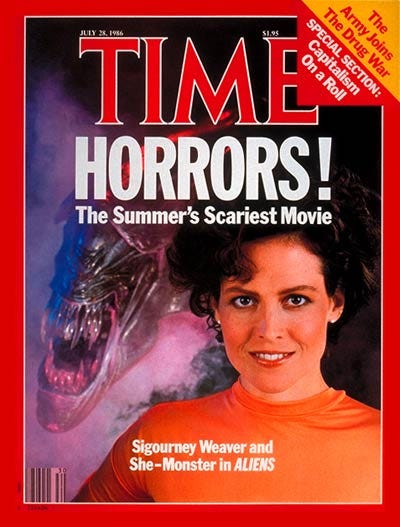
Keith, even a partial list might shock you: Aliens, Big Trouble in Little China, Blue Velvet, Cobra, Crocodile Dundee, The Color of Money, F/X, Ferris Bueller’s Day Off, The Fly, Hannah and Her Sisters, Little Shop of Horrors, Manhunter, Maximum Overdrive, Platoon, Pretty in Pink, Stand By Me, and Top Gun.
Truly, we are now living through a cinematic Dark Age.
KEITH: Damn, dude. I can’t believe that your list of 1986’s cinematic triumphs failed to include Friday the 13th Part VI: Jason Lives, which is in my estimation the finest installment in the seminal slasher series. Like Steve Winwood, the brain trust behind the Friday the 13th series seems to have decided that ‘86 was the year when they would finally take that next step into the big leagues. Part I is the “Spencer David Group” of the franchise — deeply impactful, sure, but undeniably scrappy and decidedly juvenile. Parts II and III are the “Traffic” episodes; they’re rote but palatable, serving up the basic elements that drew an audience in the first place without adding much in the way of inspiration or passion. Part IV is “Blind Faith” — whereas Winwood knew he need to rely on the celebrity of Clapton and Baker in order to peddle his sad wares, the FtXIIIth team knew they needed to add a pair of ringers, and so brought in the dream team of Corey Feldman and Crispin Glover, who add a desperately-needed dollop of star power to the proceedings. Flush with that success though, everybody phones it in with their next moves — Winwood retreats to the company of that insufferable pack of no-names in “Traffic,” and FtXIIIth delivers Part V: A New Beginning, which is so lacking in recognizable faces that it manages to exclude Jason Voorhees himself (which admittedly makes my analogy break down a bit. I guess Part V is more like a Traffic album with no Steve Winwood). But then, oh glory, in 1986, one month apart, Steve and Jason deliver their magnum opera. My god, can you simply imagine living in late-summer ‘86, driving in your convertible Volkswagen Cabriolet, blasting “Higher Love” on the cassette deck with a pair of tickets to the 8:30pm showing of Jason Lives (you don’t have a date or anything, you just bought a seat for all your snacks)? It can be said with no trace of exaggeration that in 1986, Winwood, Voorhees, and the entirety of humankind were well and truly back in the high life, Chris.